
Yield-Bearing Stablecoins = Tokenized Hedge Funds? What the msUSD Collapse Taught Us About Stablecoin and Lending Vault Risk
Yield-Bearing Stablecoins are the fastest-growing sector in DeFi. Are they a new tokenized hedge funds?

Accountable, proof-of-reserves protocol, ended its Main Street verification deal on 20th June. Within 24 hours, msUSD - Main Street stablecoin - lost its peg to USD and was traded near $0.29. The yield stablecoins - msY - also lost 71% of their value, creating a bad-debt risk and a liquidity crunch in some Morpho vaults.
The reserves are the backbone of stablecoins. The full backing guarantees that 1 stablecoin token has a redemption value of 1 dollar. The active management of the reservers generates revenue for the issuer. Tether and Circle generated $5.2 billion and $2.7 billion in revenue, respectively. The token holders of USDT and USDC receive zero yield.
The value proposition of yield stablecoins is straightforward: the same dollar denomination, the same downside protection, but with the token’s value appreciating every day as the underlying reserves generate returns. According to StableWatch, the supply of yield-bearing stablecoins has grown from roughly $1.5 billion to more than $11 billion in under two years, making them the fastest growing sector of DeFi.
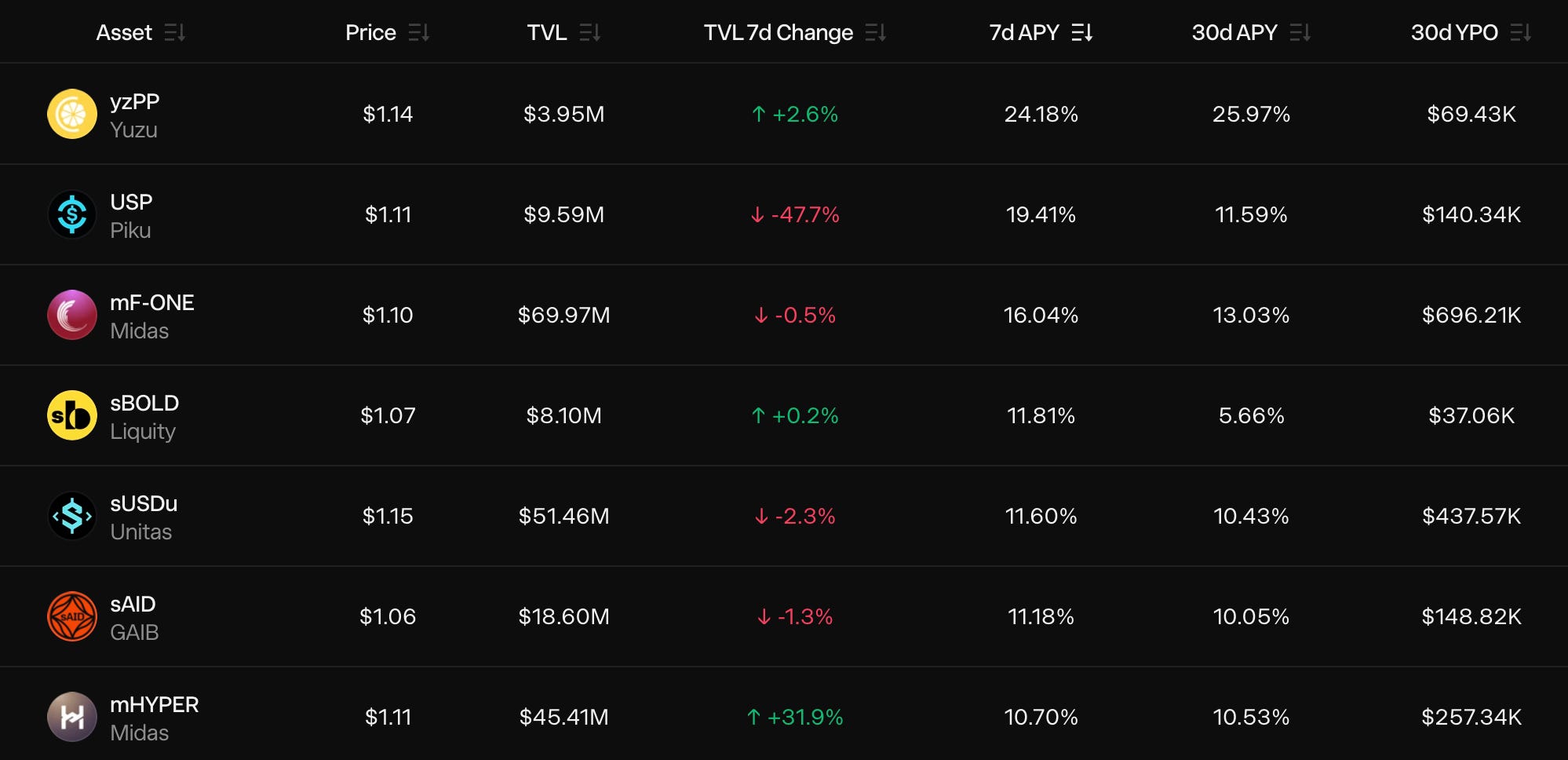
The recent collapse of Main Street’s msUSD and msY is a reminder that the appeal and the reality of yield-bearing stablecoins are not always the same thing. Understanding the difference matters as much for lending vault allocators as it does for token holders.
What a Yield-Bearing Stablecoin Actually Is
Traditional stablecoins, such as USDC from Circle and USDT from Tether, are designed primarily as transaction and settlement instruments. The reserve capital backing each token is held in bank deposits or short-term government securities. The interest income is held by the issuer, contributing to its revenues. The stablecoin holder receives price stability and liquidity - which, for many use cases, is sufficient.
Yield-bearing stablecoins alter this economic and redistribute the yield earned back to token holders:
The stablecoin reserves are deployed into a yield-generating strategy.
The returns are passed through to token holders - most commonly through gradual appreciation in the token’s net asset value (rather than periodic distributions).
Every yield-bearing stablecoin is, in economic terms, an investment product. The yield must originate from a specific strategy, and the nature of that strategy - its risk profile, its liquidity characteristics, its counterparty dependencies - determines the true risk profile of the instrument, independent of how it is marketed or categorized.
The three major yield sources include:
Tokenized Treasury - part of the stablecoin reserves are held in short-term U.S. Treasury bills or equivalent instruments. The yield tracks the risk-free rate, and the risk profile is close to that of a money market fund. These products carry credit and market risk, but the sources of that risk are transparent and, in most cases, subject to established financial regulation.
DeFi lending: reserves are allocated into overcollateralised lending protocols. Borrowers post collateral in excess of the loan value, and the interest flows to stablecoin holders. Yields move with on-chain borrowing demand. The risk profile includes smart contract exposure, liquidation risk in stressed markets, and yield compression when borrowing activity falls.
Synthetic and strategy-based stablecoins generate returns through (perpetual) funding rate capture, delta-neutral derivatives positions, and options strategies. These can offer materially higher yields than the other categories in favourable conditions. They also carry the highest complexity, the most dependence on off-chain counterparties and market conditions.
The stablecoin APY tells very little. The underlying strategy determines the risk.
Examples of yield stablecoins:
USDY (Ondo Finance) — backed by short-term U.S. Treasury notes and bank deposits. Yield accrues automatically into the token’s price, which appreciates gradually as interest accumulates. No staking required.
USDM (Mountain Protocol) — also backed by U.S. Treasury bills, but using a rebasing design: the holder’s balance increases daily to reflect interest earned rather than the price per token changing. Fully regulated in Bermuda.
Noon — backed mostly by Fasanara Capital’s tokenized private credit funds, with proof of reserves provided through Accountable. The underlying exposure is to regulated, auditable real-world credit rather than off-chain strategies.
The msUSD Collapse: What Happened with the Reserves?
Main Street issued two tokens: msUSD, pegged to 1 USD, and msY, a yield-bearing stablecoin. The returns were generated through an active off-chain trading strategy on the reserves. Accountable, a proof-of-reserves provider, was using zero-knowledge proofs to attest to the existence of off-chain reserves of Main Street (without revealing their composition).
The collapse followed a specific sequence.
Accountable terminated its verification relationship with Main Street. The reasons were not fully disclosed.
As a consequence, market participants could not verify that the off-chain reserves existed. Main Street assured that its stablecoins remain fully backed, but did not provide sufficient arguments.
The market price of msUSD and msY collapsed
The loss of value of msY caused a bad debt risk and liquidity crunch in Morpho vaults that allowed msY as collateral.
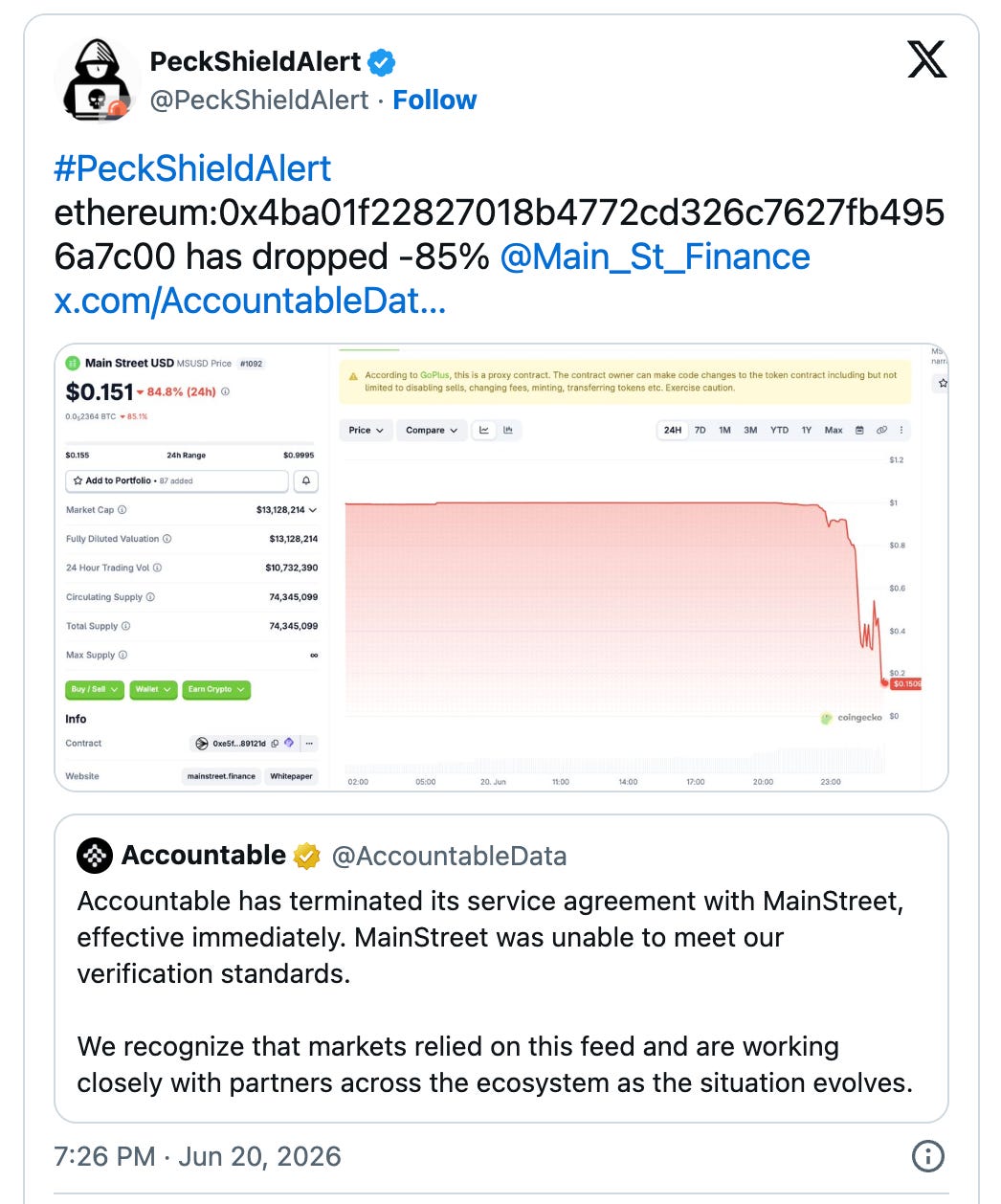
A stablecoin backed by an off-chain strategy with no independent verification is, in practice, backed by the issuer’s word.
A note on ZK proof of reserves. Accountable and similar services use zero-knowledge cryptography to confirm that assets exist up to a claimed value without disclosing their specific composition. This is a genuine advance, it enables privacy-preserving verification of off-chain holdings. Its limitation is that the attestation is only as reliable as the ongoing relationship between verifier and issuer, and only as current as the most recent attestation.
The Impact on Lending Vaults
The most instructive part of the msUSD story is not the loss of peg itself. it is what happened to lending vaults that had accepted msY as collateral.
As msY’s value declined sharply, borrowers who had posted it as collateral faced liquidation. Depositors who had allocated stablecoins into msY-collateralised vaults moved to withdraw. Market utilisation reached 100% - all deposited capital was already lent out against illiquid collateral. Borrowing rates spiked as the protocol tried to incentivise repayment. Depositors found themselves temporarily unable to exit positions they had every right to exit - not because the collateral had vanished, but because the liquidity to honour withdrawals was not there. This risk is called liquidity crunch.
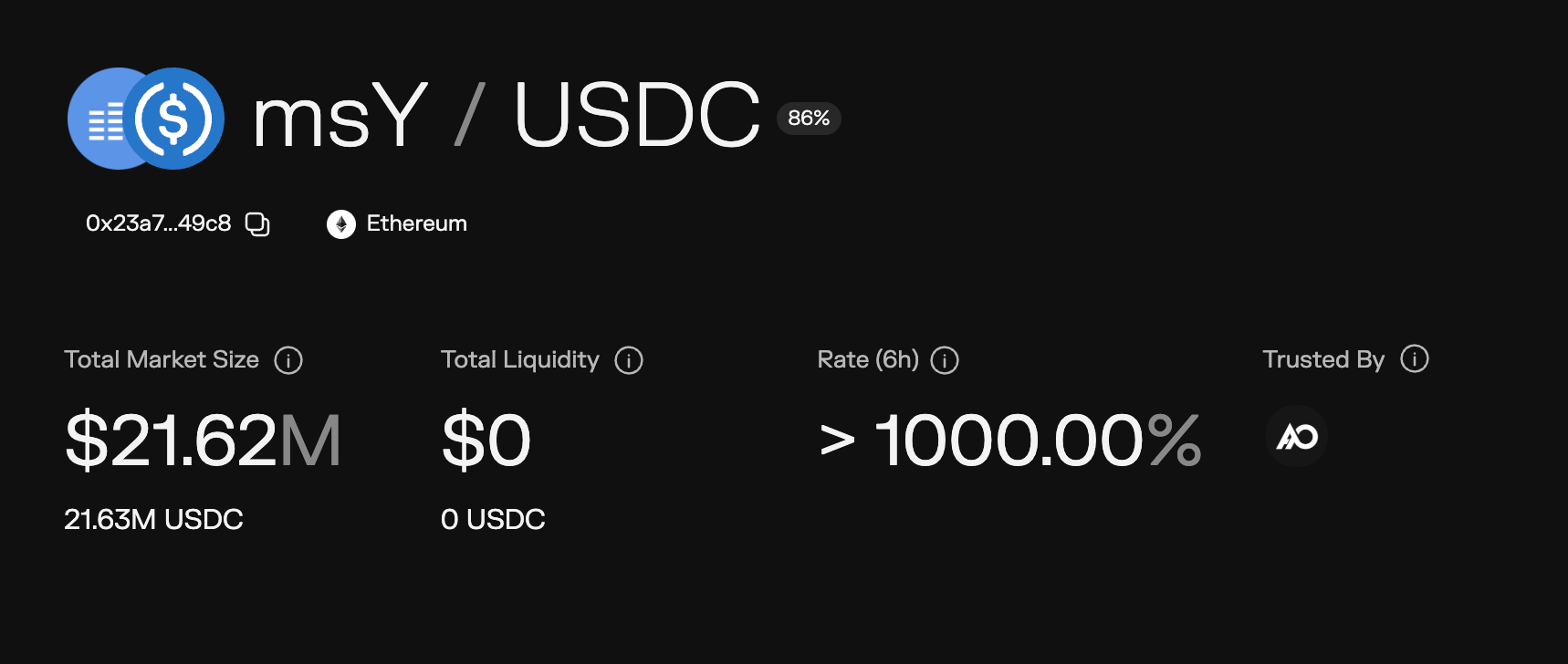
What is a liquidity crunch? A liquidity crunch in a lending vault occurs when demand for withdrawals exceeds the available undeployed capital. Even where collateral retains some value, a rapid deterioration can trigger simultaneous borrower defaults and depositor redemptions at a scale the vault cannot absorb. The collateral remains on the books; the cash to return to depositors does not.
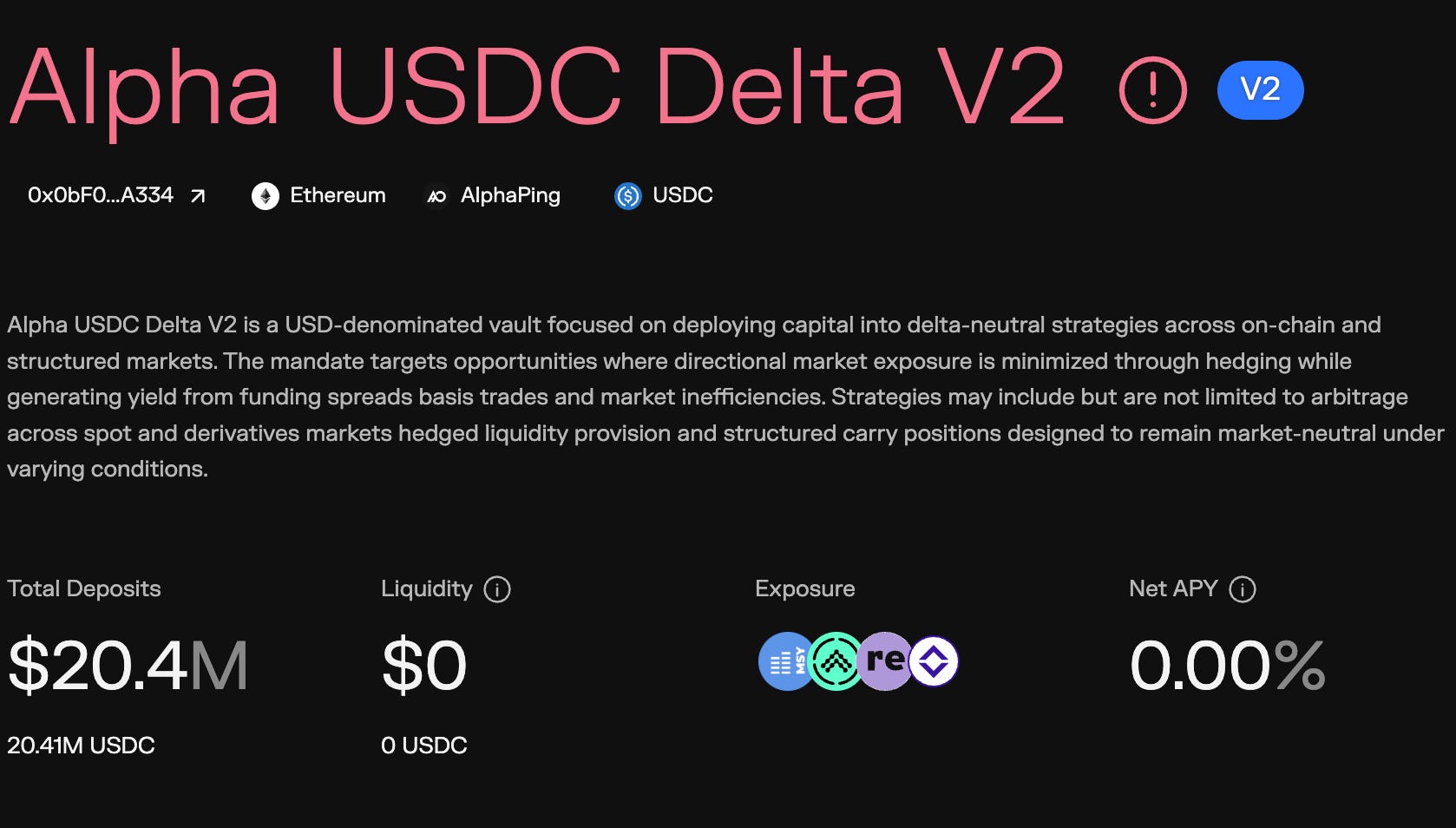
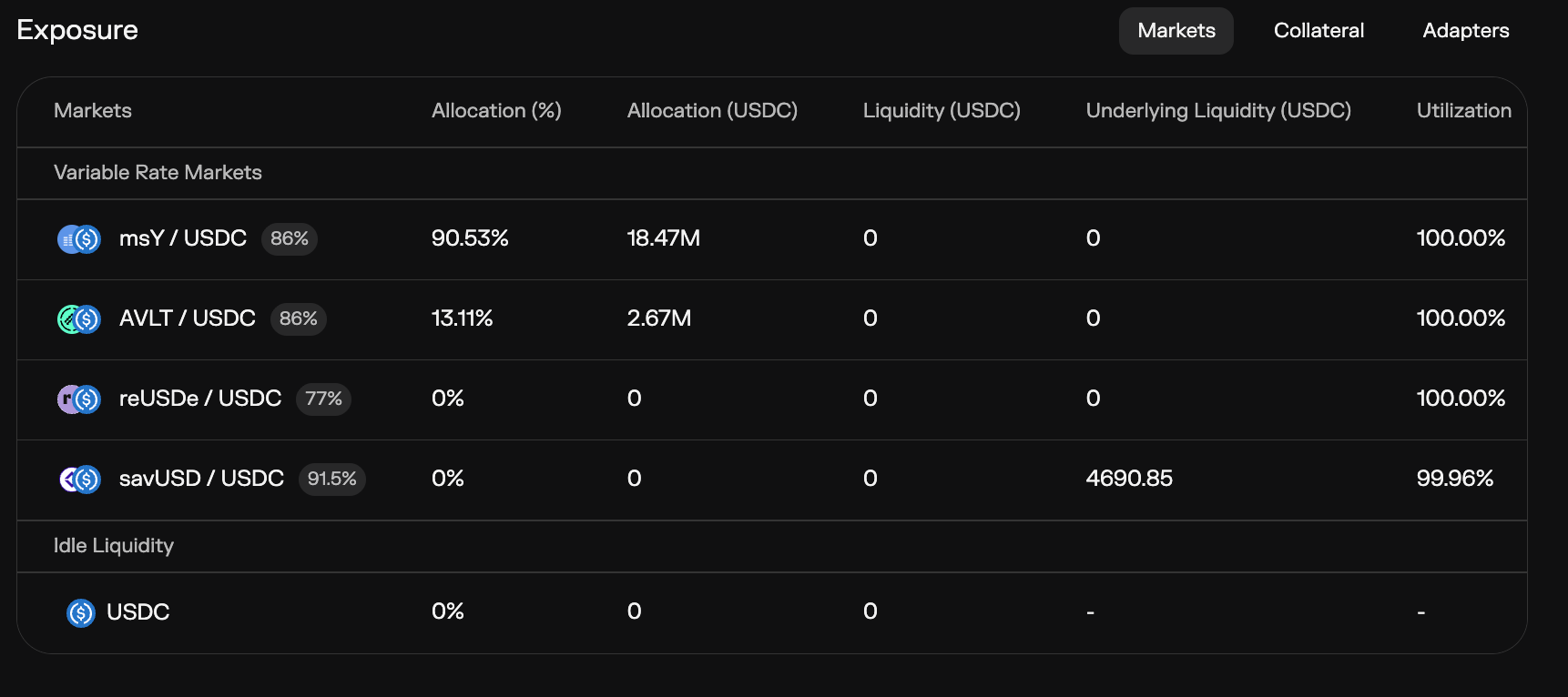
The lesson for lending vault allocators is direct: a vault’s risk profile depends not only on the accepted collateral, but also - and most importantly - the collateral quality.
A lender who allocates capital into a vault that holds synthetic yield stablecoins as collateral carries indirect exposure to every strategy risk, counterparty dependency, and verification relationship underlying those assets - whether that is visible or not.
How Professional Curators Responded
The msUSD event caused a clear reallocation trend among curators:
reduce or eliminate exposure to strategy-backed yield stablecoins
increase allocations toward RWAs, especially tokenized private credit products.
Unlike some yield-bearing stablecoins, tokenized RWAs are often securities (such as funds) and are subject to regulations. At the same time, they bring a new type of risk (default risk), specific to the category.
Why do curators allocate at all to yield tokens or tokenized private credit?
The answer is yield. Whereas the prime vaults allocate only to blue-chip tokens (such as Eth or wrap BTC), their yield is just around 4%. To increase the APY of frontier vaults, curators seek riskier collateral, as it yields higher APYs.
Five Lessons for Investors
Yield always comes with a specific risk. A 12% return from funding rate capture and a 3% return from short-duration Treasury bills are not comparable instruments. Evaluating the strategy is the starting point. The same logic applies to the comparison between DeFi vaults.
A yield-bearing stablecoin is an investment product. A stablecoin can maintain its peg as long as the value of reserves exceeds the value of tokens in circulation.
In a stress event, a synthetic or strategy-backed stablecoin can fall in value (just like any other actively managed strategy) if the reserves lose value.
Dependencies are where risk concentrates. Proof-of-reserves providers, off-chain trading counterparties, and oracles can each be a single point of failure. The msUSD collapse began with a lack of transparency regarding the off-chain reserves and removal of one dependency — the verification relationship.
Lending vaults carry the risk of their collateral. Allocating to a vault means taking on exposure to every asset the vault accepts as collateral. A thorough assessment requires understanding not just the vault’s own parameters but the instruments behind the collateral and their underlying strategies.
Off-chain strategies need on-chain verification. Assets backed by off-chain activities - trading books, private credit portfolios, insurance reserves - require continuous, independent verification. Without it, investors are relying on the issuer’s word rather than evidence. The right alternative is regulated structure (RWAs): tokenized funds operating under established financial regulation, with proof of reserves from credible independent verifiers. Noon’s backing by Fasanara Capital’s regulated private credit funds, verified through Accountable, is a concrete example.
Allocation platforms that take this seriously are already drawing the relevant distinctions. Nook screens every vault it lists against the full collateral dependency chain. None of the vaults currently on Nook carry exposure to synthetic or strategy-based yield stablecoins.
Closing Thoughts
The msUSD collapse is unlikely to be the last stress event for yield-bearing stablecoins. As the sector grows beyond its current $11 billion market size, investors will increasingly differentiate products not by their headline APY, but by the quality of the underlying strategy, the transparency of the reserves, and the robustness of the verification infrastructure.
The reaction of Morpho’s curators illustrates this shift. Rather than abandoning yield-generating assets altogether, they have moved towards tokenized private credit. These assets are not risk-free, but their underlying cash flows rooted in regulated financial instruments brought on-chain.
The lesson is not that yield-bearing stablecoins are “bad” or that tokenized private credit is inherently “safe.” Some yield-bearing stablecoins resemble conservative money market funds, while others look much closer to actively managed hedge fund strategies. Likewise, the risk profile of tokenized RWAs depends entirely on the quality of the underlying assets and issuers.
There is no universal definition of a “safe” yield-bearing dollar. The only reliable rule is to understand where the yield comes from, who manages the risk, and what happens when markets come under stress. As always in DeFi, due diligence matters more than headline returns.